Learning Management Admin Dashboard: A Comprehensive Evaluation
In the rapidly evolving landscape of educational technology and enterprise software, the interface through which administrators manage data is critical. The Learning Management Admin Dashboard represents a specialized design framework intended to streamline the oversight of educational content, user progress, and system metrics. While the term specifically references learning environments, the underlying principles and structural components of such dashboards often extend to broader applications, including Customer Relationship Management (CRM), Content Management Systems (CMS), and Human Resource Management Systems (HRMS). Understanding the utility, limitations, and implementation requirements of these dashboard designs is essential for developers, project managers, and business owners evaluating their next digital infrastructure.
Defining the Learning Management Admin Dashboard
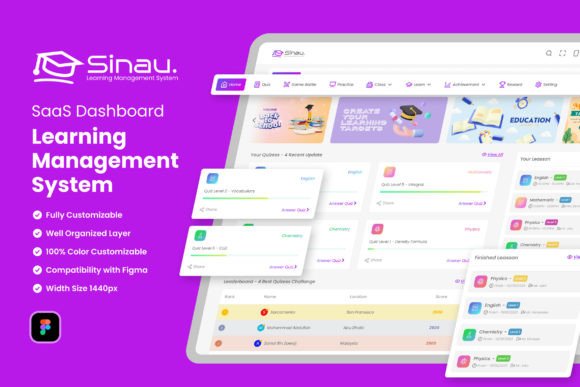
A Learning Management Admin Dashboard is not merely a collection of charts and graphs; it is a strategic command center designed to provide high-level visibility into an organization's educational operations. In the context of web application development, this refers to a comprehensive user interface layout that allows administrators to monitor student enrollment, track course completion rates, manage instructor permissions, and analyze engagement metrics in real-time. When discussing specific design assets, such as those created in professional tools like Figma, the focus shifts to the visual and structural blueprint used to build these interfaces.
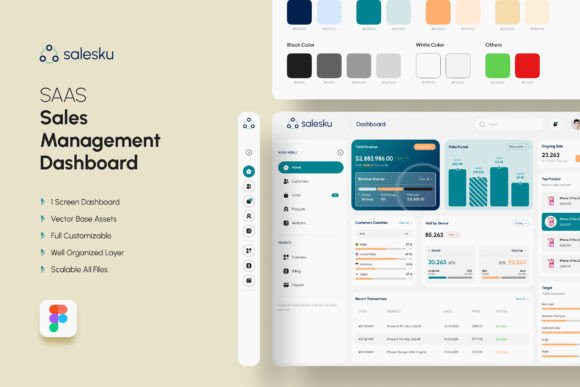
These dashboards are typically characterized by a modular architecture. They include distinct sections for calendars, notification systems, mail notes, and data visualization widgets. The design philosophy prioritizes clarity and efficiency, ensuring that complex data sets are presented in an accessible format. For a system to function effectively, the dashboard must be fully layered and organized, allowing for rapid iteration and customization. This ensures that whether the platform serves a small personal business or a large corporate entity, the administrative experience remains consistent and intuitive.
Why Evaluate a Custom Dashboard Design?
Organizations often consider investing in a custom Learning Management Admin Dashboard when off-the-shelf solutions fail to meet specific operational needs. The primary driver for this interest is the desire for tailored functionality. Standard software packages may offer generic reporting tools that do not align with unique business logic or specific educational methodologies. By utilizing a professionally created template, teams can accelerate the development process while maintaining full control over the user experience.
Furthermore, the versatility of modern dashboard templates allows them to serve multiple purposes beyond education. A well-structured admin panel can be adapted for e-commerce platforms to track sales, support portals to manage tickets, or social networks to moderate community activity. The ability to repurpose a single design system across various sectors—such as SaaS, CRM, and HRMS—reduces design debt and ensures brand consistency across different digital products. For teams looking to launch quickly, having a pre-organized set of assets that includes calendar views, mail interfaces, and note-taking modules significantly reduces the time spent on initial UI construction.
Benefits and Strategic Advantages
The adoption of a structured dashboard design offers several tangible benefits. First and foremost is the acceleration of the development lifecycle. When a design file is fully layered, vector-based, and retina-ready, developers can extract assets with precision. This eliminates the need to redraw elements from scratch, allowing engineering teams to focus on backend logic and integration. Additionally, the use of free fonts from Google Fonts ensures that the final product remains lightweight and compatible across various devices without licensing complications.
Another significant advantage is the flexibility in branding. Dashboards that utilize RGB color modes and easily adjustable layers allow organizations to align the interface with their corporate identity effortlessly. Changing colors, shapes, and effects becomes a matter of modifying style variables rather than reconstructing the entire layout. This adaptability is crucial for agencies managing multiple clients or companies launching new product lines that require distinct visual identities. Moreover, the clean organization of files facilitates collaboration between designers and developers, reducing miscommunication and ensuring that the final build matches the original vision.
Tradeoffs and Considerations
While the advantages are clear, there are tradeoffs to consider when relying on pre-designed templates. One potential limitation is the scope of customization. Although these templates are designed to be flexible, they may not accommodate highly niche workflows without significant modification. Organizations with extremely complex data structures might find that the standard widgets require substantial re-engineering to display information accurately. It is important to assess whether the template's default structure aligns with the specific data hierarchy required by the application.
Additionally, the reliance on specific file formats, such as Figma files, requires a team proficient in that toolchain. If an organization's workflow relies on different design software, importing and adapting these assets may introduce friction. There is also the consideration of scalability. A dashboard designed at 1920 x 1665 pixels is optimized for desktop viewing. Ensuring that this design translates seamlessly to mobile or tablet interfaces requires additional effort and responsive design planning, which may not be included in the initial asset package. Teams must account for the resources needed to adapt the high-fidelity desktop mockups into a fully responsive web application.
Situations Where This Approach Fits Best
The Learning Management Admin Dashboard is an excellent fit for startups and mid-sized enterprises looking to establish a robust administrative presence without the overhead of building from scratch. It is particularly suitable for projects where speed to market is a priority. For instance, an educational institution launching a new online course platform can leverage these templates to present a professional interface immediately. Similarly, SaaS companies developing white-label solutions for clients will benefit from the modularity and ease of color customization, allowing them to deploy branded versions of the same core application efficiently.
This approach is also ideal for internal tools within larger corporations. Departments such as HR or IT often require custom dashboards to manage employee training or system monitoring. Using a pre-organized template allows these internal teams to prototype and deploy functional interfaces rapidly. The inclusion of features like calendar management and mail notes makes it a strong candidate for productivity-focused applications where administrative oversight is central to daily operations.
When to Consider Alternatives
There are scenarios where a template-based approach may not be the optimal choice. Large-scale enterprise systems with legacy integrations often require bespoke designs that adhere to strict compliance and security standards that generic templates may not address out of the box. If an organization has unique accessibility requirements or needs to integrate with proprietary hardware, a custom-built solution designed from the ground up might be more appropriate.
Furthermore, if the project involves highly interactive data visualizations that go beyond standard charts and graphs, a static design file may not suffice. Applications requiring real-time data streaming, complex animations, or advanced gamification elements might need a more dynamic design process. In these cases, the initial investment in a custom design could yield better long-term results than adapting a pre-existing template. It is also worth noting that while the design assets are provided, the images used for preview purposes are not included in the download. Teams must have access to their own stock imagery or photography resources to populate the final interface effectively.
Practical Decision-Making Insights
When deciding whether to adopt a Learning Management Admin Dashboard template, stakeholders should conduct a thorough audit of their functional requirements. Begin by mapping out the key data points and workflows that the dashboard must support. Compare these against the features offered in the template, such as the calendar, mail, and note modules. If the core structure aligns, the template can serve as a powerful foundation. However, if significant gaps exist, calculate the cost of customization versus building anew.
Consider the technical capabilities of your team. Ensure that you have the expertise to work with Figma files, convert vector shapes into code, and implement responsive design patterns. The value of a template lies in its execution; a poorly implemented design can undermine the user experience regardless of how well-organized the source files are. Finally, think about the long-term maintenance. A clean, organized file structure will make future updates easier, but only if the team adheres to the established design system. By weighing these factors, organizations can determine if this solution aligns with their goals and delivers the necessary balance of efficiency, flexibility, and professionalism.