Referral Icons: A Practical Guide to Vector Network Resources for Web Design
In the landscape of modern web design, the choice of visual assets often dictates the perceived professionalism and usability of a digital product. Among these assets, referral icons serve as critical navigational cues, guiding users through affiliate links, sharing mechanisms, and network connections. The Referral Icons collection, specifically the "Hi, welcome to the store" vector network pack, represents a specific category of design resources tailored for high-fidelity implementation. This article examines the technical specifications, practical applications, and comparative advantages of this resource to help designers and developers make informed decisions regarding their asset libraries.
Understanding the Technical Foundation of Referral Icons
The core value of any vector graphic lies in its scalability and resolution independence. Unlike raster images, which degrade when enlarged, vector formats such as EPS, SVG, and PNG (with transparency) maintain crisp edges at any size. The Referral Icons ZIP file distinguishes itself by offering a comprehensive suite of these formats within a single package. For professionals managing multiple platforms—from responsive mobile sites to large-format marketing displays—this versatility is not merely a convenience; it is a necessity.
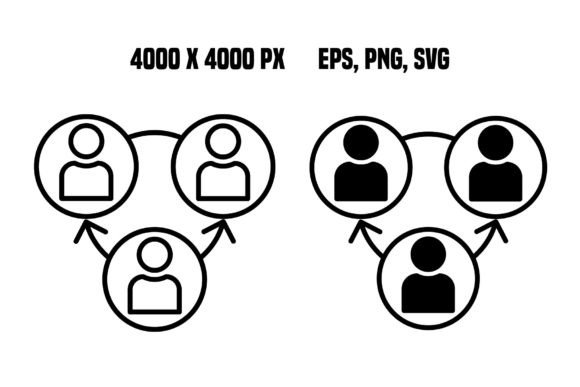
The inclusion of high-resolution files at 300 dpi with dimensions of 4000 x 4000 pixels addresses a common pain point in contemporary design workflows. Many free or budget icon sets provide low-resolution previews that appear pixelated on Retina displays or high-density screens. By providing a source file that exceeds standard print and screen requirements, this resource ensures that the "welcome to the store" concept remains visually sharp whether rendered as a tiny button on a mobile interface or a large hero image on a landing page. The transparent background capability further streamlines integration, allowing designers to overlay these icons onto complex gradients or photographic backgrounds without unsightly white boxes.
Evaluating Formats: EPS, SVG, and PNG in Context
When comparing vector resources, the variety of included file formats is a primary decision factor. The Referral Icons set provides three distinct types, each serving a different stage of the production pipeline:
- EPS (Encapsulated PostScript): This format is essential for print media and professional desktop publishing software like Adobe Illustrator. It retains all editable paths and layers, making it ideal for designers who need to modify colors, stroke weights, or geometry to match a specific brand identity.
- SVG (Scalable Vector Graphics): As the native language of the web, SVG is crucial for frontend development. It allows for CSS styling, JavaScript interaction, and instant loading without quality loss. For web designers implementing dynamic referral networks, the SVG version of these icons ensures seamless performance and accessibility.
- PNG (Portable Network Graphics): While technically a raster format, high-resolution PNGs with transparency are indispensable for quick prototyping, email marketing templates, or CMS platforms that do not support direct SVG embedding. The 4000 x 4000 pixel resolution provided here mitigates the usual downsides of PNG usage.
This multi-format approach contrasts sharply with many alternative resources that offer only a single format, forcing the user to convert files manually—a process that can introduce errors or limit editability. By delivering all three, the Referral Icons package reduces workflow friction and accommodates diverse project requirements.
Comparing Styles and Design Approaches
Iconography in web design generally falls into two broad categories: flat/minimalist and detailed/illustrative. The "Hi, welcome to the store" vector network icons lean towards a balanced aesthetic that prioritizes clarity while retaining enough detail to convey warmth and invitation. This stylistic choice is significant when evaluating alternatives.
Minimalist icon sets, often characterized by thin lines and simple shapes, excel in data-heavy dashboards but may lack the personality required for e-commerce or community-driven platforms. Conversely, highly illustrative icons can be engaging but often suffer from file bloat and slow load times. The Referral Icons collection attempts to bridge this gap. The design elements are structured to be recognizable at small sizes yet expressive enough to function as standalone visual anchors.
When comparing this resource to generic stock imagery, the distinction becomes clear. Stock photos often require cropping, masking, and color correction to fit a website's theme. In contrast, vector network icons are designed with modularity in mind. They are built to integrate directly into UI components, ensuring consistency across the user journey. For teams focused on maintaining a cohesive brand voice, the ability to scale these icons without losing their structural integrity offers a distinct advantage over bitmap-based alternatives.
Decision Factors: When to Choose Referral Icons
Selecting the right icon set requires an honest assessment of project scope and technical constraints. The Referral Icons resource is particularly well-suited for specific scenarios where quality and flexibility are paramount.
Ideal Use Cases
This collection is an optimal choice for e-commerce platforms launching referral programs. The "welcome to the store" theme aligns perfectly with onboarding flows, sign-up bonuses, and partner network introductions. If your project involves creating a custom dashboard for affiliates or partners, the high-resolution nature of these files ensures they look professional on large monitors used by sales teams.
Furthermore, agencies working on client projects with strict branding guidelines will find the EPS and SVG formats invaluable. The ability to tweak the vector paths allows for precise color matching and minor geometric adjustments, something that is impossible with pre-rendered PNG-only packs. For designers who anticipate needing to adapt the icon for various mediums—such as social media graphics, printed brochures, and web banners—the 300 dpi resolution provides a safety margin that lower-quality assets cannot match.
Limitations and Tradeoffs
Despite its strengths, this resource may not be the best fit for every situation. Projects requiring hundreds of unique, niche-specific icons might find a single-file ZIP containing only two design elements insufficient. In such cases, a comprehensive library with thousands of symbols would offer better long-term value.
Additionally, if a project has extremely tight bandwidth constraints, such as a lightweight Progressive Web App (PWA) targeting low-end devices, the sheer file size of a 4000 x 4000 PNG might be excessive. While the SVG format mitigates this, designers must still optimize the code before deployment. For rapid prototyping where speed outweighs final polish, simpler, lower-resolution icon packs might allow for faster iteration cycles.
Strategic Integration into Web Design Workflows
The true value of the Referral Icons extends beyond the files themselves; it lies in how they are integrated into the broader design system. Because the icons are vector-based, they can be styled dynamically using CSS. This means a single SVG file can change color based on user interaction, hover states, or dark mode toggles without requiring multiple image assets.
Consider a scenario where a designer is building a referral landing page. Using the high-resolution PNGs, they can create a compelling hero section that loads quickly on modern browsers. Simultaneously, the SVG versions can be embedded directly into the HTML for interactive buttons that guide users to share their unique referral links. This dual-approach leverages the strengths of both raster and vector formats, maximizing visual impact while maintaining performance.
Moreover, the transparency of the images allows for creative layering. Designers can place these icons over textured backgrounds, glassmorphism effects, or vibrant gradients without worrying about background clashes. This flexibility encourages experimentation and helps brands stand out in a crowded digital marketplace. However, it also places a higher demand on the designer's skill level; unlike drop-in raster images, vector assets require a basic understanding of design principles to ensure they harmonize with the surrounding interface.
Conclusion on Resource Selection
The decision to utilize the Referral Icons vector network pack ultimately depends on the specific needs of the project and the priority placed on asset quality. For professionals seeking high-resolution, multi-format resources that offer both print and web versatility, this collection presents a strong option. Its focus on scalability, transparency, and editable formats addresses common technical hurdles in modern web design.
While it may not replace the need for massive icon libraries in large-scale enterprise applications, it excels as a targeted solution for specific use cases like referral programs, store welcomes, and network visualizations. By weighing the benefits of high fidelity against the limitations of a smaller asset count, designers can determine if this resource aligns with their strategic goals. In an industry where visual clarity drives user engagement, investing in robust, adaptable vector assets remains a prudent step toward building effective digital experiences.